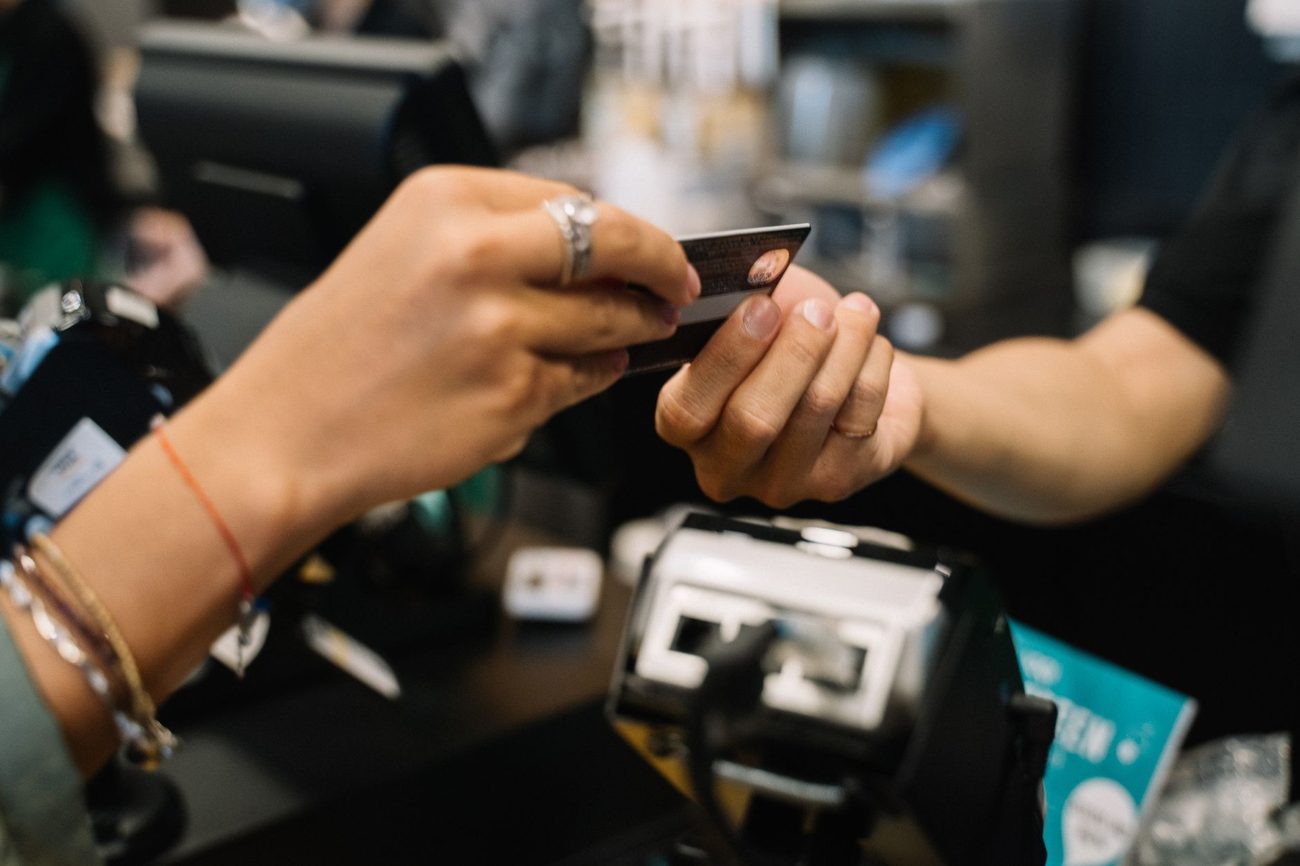
The pump clicked off at 11.8 gallons outside Lumberton on my way home Tuesday, $34.90 at about $2.96 a gallon, and I did what I always do: tucked the receipt into the trip envelope and checked that the card in my hand was the right one. We only use one. That's most of the system, honestly, but people have asked how we handle the card side of trip money, so here it is.
We have one no-annual-fee cash-back credit card that we use for exactly two kinds of spending: gas and groceries. Trip costs go on it too, since trips are mostly gas and food anyway. I'm not naming the card or the bank. There are a lot of decent ones, the terms change, and I'd hate for anyone to pick a card because a blogger in North Carolina mentioned it.
What matters about ours is pretty plain. It has no yearly fee. It gives a flat percentage back on everything, with a little more on gas. There's no point system to decode and no catalog to shop from. The cash just builds up in a balance we can apply to the bill whenever we want.
The rules we keep
I work the front desk at a dental office, and I've seen enough people stressed about bills to be careful here. These are our rules, not a recommendation for anybody else:
- Paid in full, every month. No exceptions. The minute we carry a balance, the interest would eat the cash-back several times over. This rule is the only reason the card is worth having.
- Only spend what's already in the bank. Trip charges get paid back from the trip account the week we get home. Gas and groceries get paid from checking. The card is a way to pay, not a way to borrow.
- No new cards for sign-up bonuses. I know people who juggle six cards and get free flights. We don't fly, and I don't want to track six due dates.
- No buying things to earn rewards. If a store offers extra cash back on something we didn't need, it's still something we didn't need.
- Autopay set to the full statement balance, with me checking the statement anyway, because I read every line of everything. Occupational habit.
Here's the honest number. Our cash-back balance right now is about $118. That's from gas for both of our daily commutes and the trips, plus groceries, over a little more than a year since we last cashed it out. Wes's Silverado gets about 16 miles to the gallon and he drives it to the shop four days a week, so the gas line on our statement is never small.
$118 isn't life changing. It's a motel night. But it's a motel night we got for doing what we were going to do anyway, which is the only kind of reward I'm interested in.
When I mentioned the number to Wes, he said, "So the truck finally paid for something." He's not wrong.
We're letting it ride for now. My plan is to save it toward a trip later this year, probably a winter one when we'd like a slightly nicer room than usual. When we do use it, I'll apply it as a statement credit against that trip's charges, so the trip account pays a little less that month.
I like that it stays a small side note. The whole idea of our trip budget is that it's simple: $250 into the trip account on the first of the month, one trip a month, under $300 a trip. The cash-back is a bonus on top of that, not part of the plan. If the card disappeared tomorrow we'd still take every trip we've planned.
A couple of things I'd check
If you're thinking about using a card this way, look at whether the gas category counts at the stations you actually use. Some cards treat warehouse club gas or certain grocery-store pumps differently. Look at whether your cash-back expires if the account goes quiet. And look hard at the interest rate, even if you never plan to pay it, because "never plan to" and "never do" aren't the same thing.
For us, the best thing about the card isn't the money. It's that every gas receipt lands on one statement, which makes adding up a trip at the kitchen table about a five-minute job.