Before every trip, the last thing I do isn't loading the car. It's walking through the house with a checklist while Wes sits in the CR-V with the engine running and June in the back seat, waiting to be dropped at Tonya's. Thermostat, water heater, the TV stand, the coffee maker, the back door. Then I lock up and get in.
For a long time I did that walk because my mother did it. This spring I finally wanted to know whether any of it actually saves money, or whether I'm just a woman who likes checklists. Spoiler: both.
We live in a 1998 brick ranch near Maxton, about 1,380 square feet. We have a heat pump that was replaced in 2021, a 40-gallon electric water heater, a well with an electric pump and a septic tank. There's no natural gas out here, so everything runs on electricity from our electric co-op.
Our electric bill averages about $165 a month over the year. In July and August, when it's in the mid-90s and the heat pump runs all day, it's closer to $230. In a mild month like April it's much lower.
Our co-op's account page shows daily usage, which is how I finally measured this. I compared our weekend days at home in April with the three days we were in Asheville the second weekend of the month.
What I turn off, and what it does
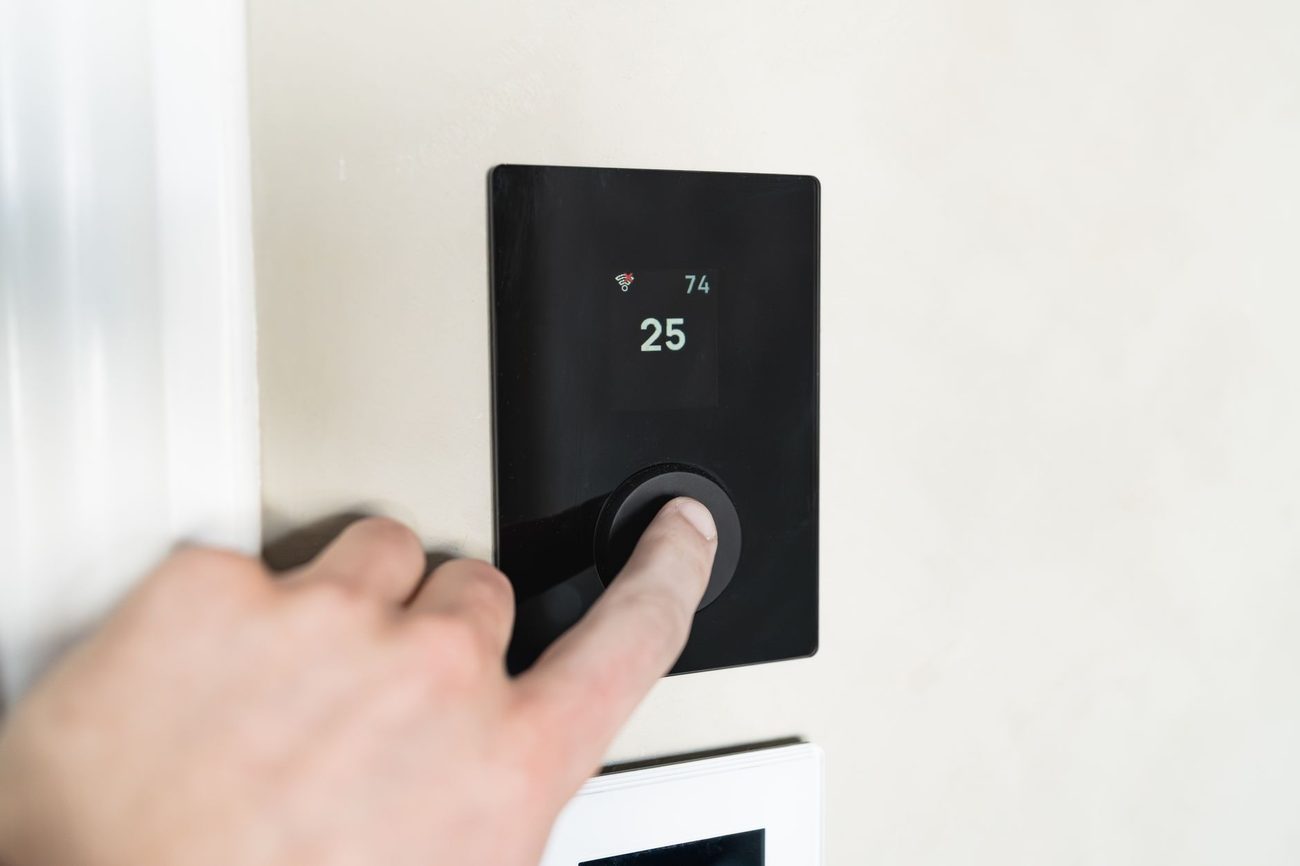
The thermostat. This is the big one. At home we keep it around 74 in warm weather and 68 in cool weather. When we leave, I set it to 82 in summer and 60 in winter. I never turn the heat pump off completely. Our summers are humid enough that a shut-up house can get musty, and in winter we've had a few frosty mornings where I'd rather not find out what the pipes think.
The water heater. I flip its breaker off before we leave. A 40-gallon tank keeps reheating itself all weekend even when nobody uses a drop, and turning it off stops that. It takes about an hour to heat back up when we get home, so I flip it on first thing, before we unpack.
Electronics. The TV, the cable box, the microwave clock, the coffee maker and the computer go on a power strip I can switch off. It's partly about the small standing draw, and partly because a thunderstorm in May is not a rare event around here.
The well pump. This one we leave on in garden season, because Mr. Earl next door waters our tomatoes from the spigot by the carport while we're gone. In winter, when there's no garden, Wes shuts the pump off at the breaker so a leak can't run all weekend. On a well, a pump running nonstop over a leak is the kind of surprise that costs more than electricity.
The numbers
Our co-op rate works out to about 12 cents per kilowatt-hour once everything is included. Our typical April weekend day at home used about 28 kilowatt-hours. The three Asheville days used 16, 15 and 17.
That's around 12 kilowatt-hours a day less, or 36 over the weekend, which comes to about $4.30. Some of that is just not being home: nobody cooking, showering, running the dryer or watching television. When I try to pull out what the settings themselves saved, it's maybe half of that, a little over $2 a weekend in April.
In summer it's more. A rough July comparison from last year suggests the thermostat alone is worth $5 or $6 over a three-day weekend, maybe $7 to $8 all together. Over twelve trips a year, everything on my checklist saves us something like $40 to $60. That's about one tank of gas for the CR-V. Not nothing, but not a reason to take a trip either.
Why I keep doing the walk
The money is real but small. The bigger reason is what doesn't happen. An electric water heater that springs a leak with the breaker off just drips. A power strip that's off doesn't care about a lightning strike two fields over. A well pump that's off in January can't run all weekend into a split pipe.
I'm not an electrician and our setup won't match everyone's, so check your own equipment before you start flipping breakers. We had Wes look at the panel and label it clearly first, which took a Saturday morning and some very small handwriting.
The walk takes about four minutes. Wes says it takes eleven. Either way, I'll keep doing it, and the $4 goes into the trip envelope as a little moral victory.