The receipt from the quick-lube place was still in the trip envelope from February: $89 for an oil change on the CR-V, plus an engine air filter they'd talked me into for another $35. I had it in my hand at the kitchen table one night in March when Wes came in from work, and I asked him the question I'd been sitting on for years. He fixes diesel engines four days a week. Why on earth are we paying somebody else to change our oil?
He thought about it for a second and said, "Because you never asked." Which is fair. So this spring, starting in April at about 113,600 miles, Wes took over the oil changes, and I took over keeping score.
What one oil change actually takes
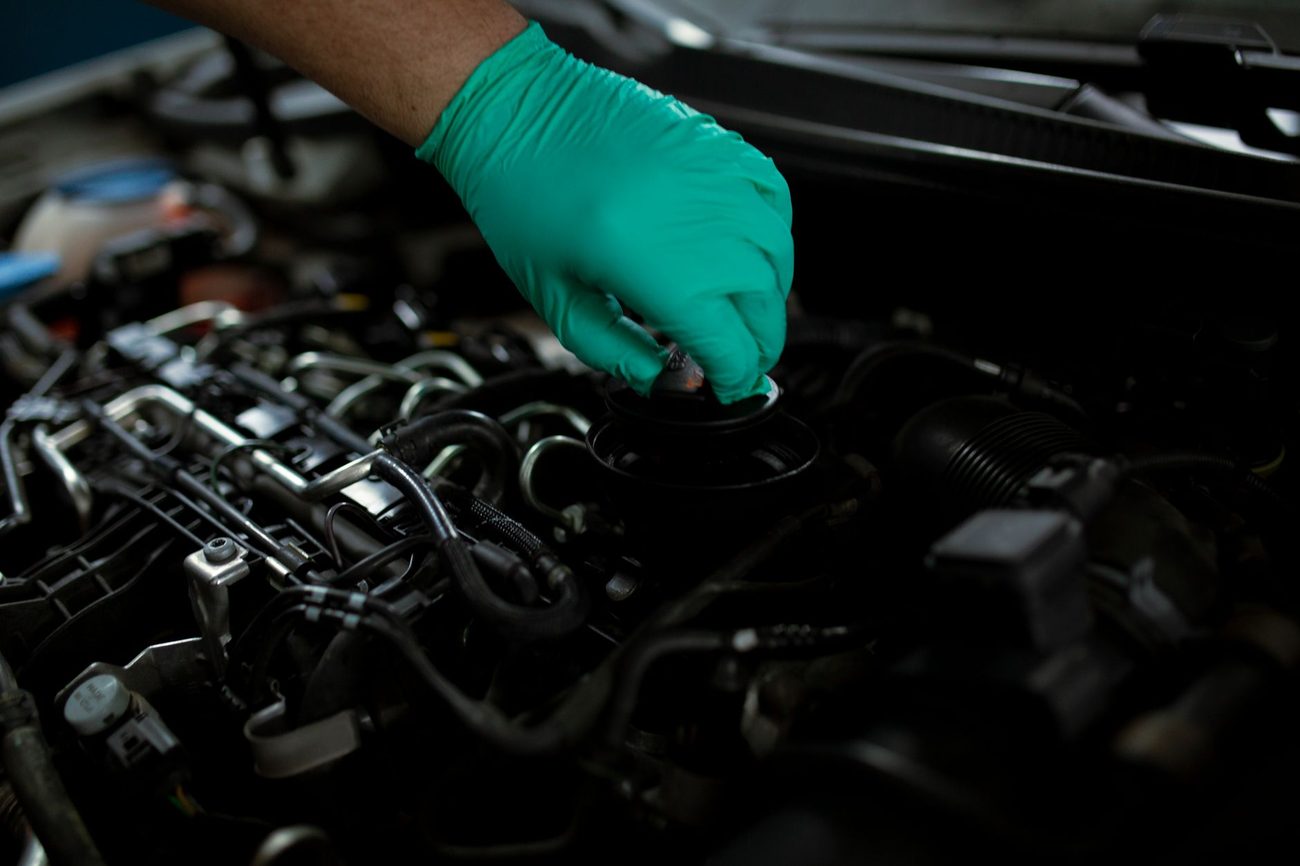
Our 2017 CR-V EX has the 1.5-liter turbo engine. It takes 0W-20 full synthetic, and a little under four quarts with a new filter, so one five-quart jug covers it with some left for topping off between changes. Here's what Wes buys at the auto parts store in Laurinburg for each change:
- Five-quart jug of 0W-20 full synthetic: about $28
- Oil filter: about $8
- New drain plug crush washer: about $2
That's $38. The tools he already owned: a socket set, a filter wrench, a drain pan, a pair of ramps and a funnel. If you're starting from nothing, the ramps, pan and filter wrench would run you somewhere around $80 to $100, which the savings cover by about the second change.
The used oil goes back to the parts store in the empty jug. They take it for free. Please don't pour it in the ditch. Mr. Earl next door would come over and have words, and he'd be right.
Time is the other cost. The first one took Wes about 45 minutes in the carport, mostly because he was reading the manual and finding where the filter hides. He figures the next one will take 25 minutes including cleanup. The quick-lube trip took me an hour and ten minutes counting the drive to Laurinburg and the wait, so we're ahead on time too.
The real savings
$89 minus $38 is $51 a change. The CR-V's maintenance reminder has been asking for oil roughly every 5,000 to 6,000 miles with the way we drive, which is a lot of highway. We drive about 1,000 miles a month between my commute to Laurinburg and the trips, so that's two or three changes a year. Call it $100 to $150 a year saved, before counting whatever extra they would have sold me at the counter.
That's not life-changing money. But our trip account gets $250 on the first of each month, and our target is under $300 a weekend. A $150 difference is roughly a night in an older motel at the beach or the gas for two of our shorter trips. Jones Lake last month cost us $81 total. That's the scale of money we're working at.
What the shop was doing that Wes now does
I asked him whether we were losing anything by skipping the shop. His answer was that the quick-lube place does a quick look at fluids, tire pressure and the air filter, and he does all of that anyway in his pre-trip check. He also looks underneath while the car is up on the ramps, which he says is the real bonus: he can see the brake lines, the exhaust hangers and the CV boots without anyone in a hurry.
He does keep a log. A strip of masking tape inside the driver's door jamb with the date and mileage, and the same thing in a little notebook in the glove box with the receipts. If we ever sell the car, I want somebody to see that it was cared for.
A couple of honest cautions. If your car is still under a warranty, keep every receipt for oil and filters so you can show the work was done on time. If you don't have a level place to work or a way to get rid of the old oil, the shop might be worth its price for you. And if you've never done it, have someone show you the first time. Overtightening the drain plug on an aluminum oil pan is a very expensive way to save $51.
For us, it was one of those things that was obvious once I said it out loud. He's been changing oil on engines with ten times the capacity of ours for twenty years. The CR-V, he says, is the easiest customer he has. It doesn't argue about the bill.