Wes laid a little plastic tread gauge on the kitchen table next to my coffee two weeks ago, like a cat bringing in a lizard. "Four thirty-seconds," he said. "Front and back, give or take." Then he went to work, and I spent my lunch break that day pricing tires.
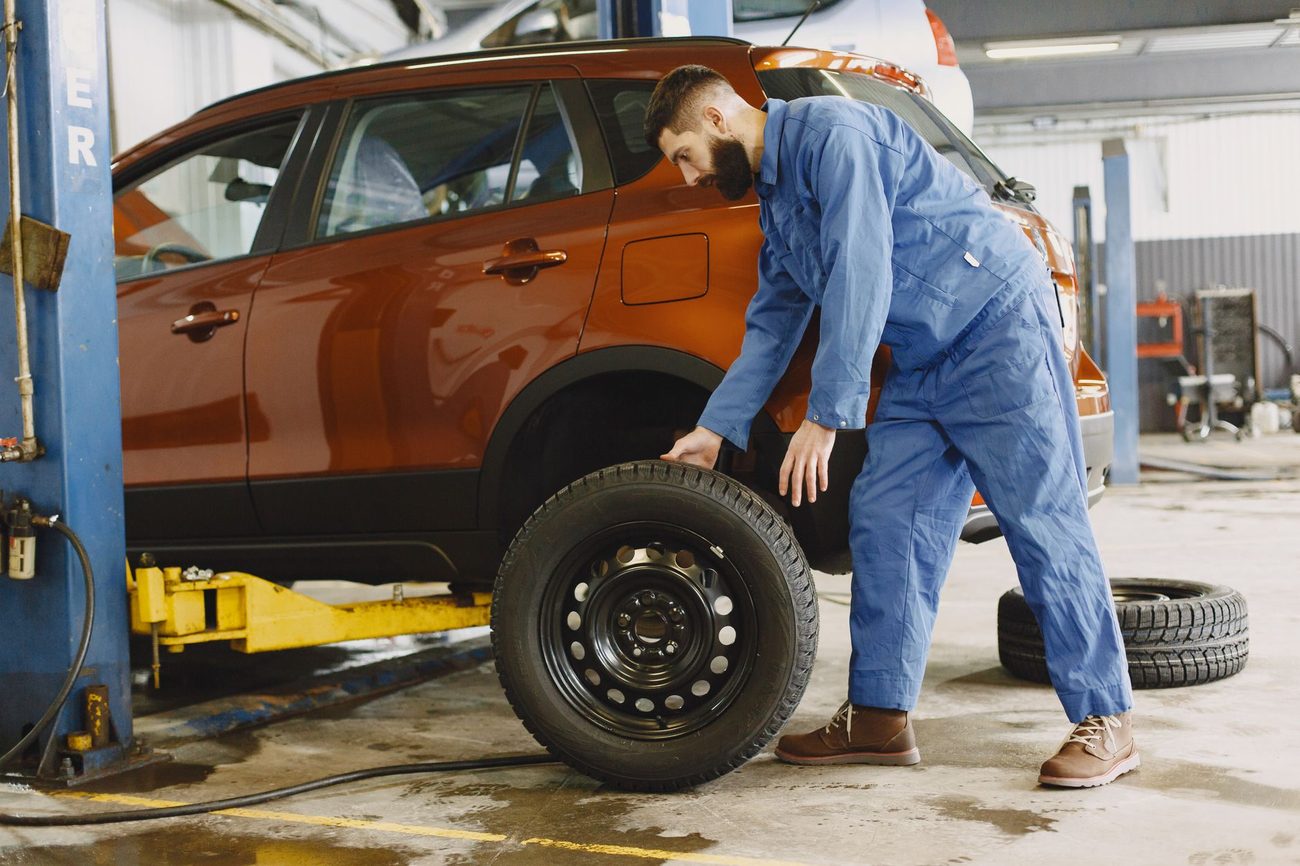
This morning the CR-V got four new ones. The odometer read just about 118,000 miles when we pulled in. Here's how we got from a tread gauge to a $684 bill, and why it wasn't the cheapest option on my list.
New tires on a car like ours start out with around ten or eleven thirty-seconds of an inch of tread. The legal minimum in North Carolina is two. Wes doesn't go by the legal minimum. At four, he says, a tire still grips fine on dry road, but in heavy rain it can't push water out of the way fast enough, and the car starts riding up on the water. We drive I-95 and US-74 in summer thunderstorms more than I'd like. That settled it.
The old set had done well. They came on the car before we bought it in 2020 at 41,000 miles, so we got roughly 77,000 miles out of them, helped along by Wes checking the pressure before every trip and rotating them with the oil changes.
How I priced them
I called three places in our area and got out-the-door prices on the same tire size. That phrase matters. A tire's price on a website is not what you pay. I asked each place to include mounting, balancing, new valve stems, disposal of the old tires and tax, and I wrote each total on a sheet of paper.
The cheapest set I found came out to $492 installed. The most expensive was a premium touring tire at $880. The one we picked was a mid-range all-season in the middle, at $684.
Why not the $492 set? Wes pulled up the specs and pointed out three things. The cheap tire had a much shorter treadwear warranty, so on a cost-per-mile basis it wasn't really cheaper. Its wet traction rating was a grade lower, and wet traction is the whole reason we were buying tires. And he's seen enough cheap tires come off trucks at the shop that he has opinions he won't put in writing.
Why not the $880 set? Because we drive a 2017 CR-V with 118,000 miles, not a new luxury car, and the mid-range tire had a long treadwear warranty and good wet ratings too. Past a certain point we'd be paying for quiet and a name.
What the $684 included
- Four mid-range all-season tires in the factory size
- Mounting and balancing
- New valve stems (rubber ones, which the shop includes in the price anyway)
- Disposal of the old four, which in North Carolina also comes with a small state fee on new tires
- Road-hazard coverage on all four
- Sales tax
The road-hazard part was the only line I went back and forth on. It covers repair or replacement if a tire gets ruined by a nail or a pothole. On two-lane roads with construction trucks and the occasional scrap of metal, I decided it was worth it on a set this new. I read the terms first, because that's my job all day at the dental office. It's prorated by tread left, and it requires the tires to be rotated on schedule with records. Wes keeps those records anyway.
We did not pay for an alignment today. Wes checked the wear on the old tires and it was even across the tread, inside to outside. If they'd been worn on one edge, he said, we'd have paid for one, because new tires on a bad alignment just wear out faster.
Where the money came from
Not from the trip account. Tires are household money, the same as the AC repair in July, and they came out of checking. I'd still rather spend $684 here than a weekend's worth of worry on a wet highway, and I have the receipt in the glove box notebook with the mileage written on top.
Next Friday we leave for Carolina Beach on four fresh tires. Wes already set the pressure. Twice.