About forty minutes into our Savannah drive in September, something in the back of the CR-V started going tink, tink, tink every time we hit a seam in I-95. Wes reached back without looking and moved a bag. It stopped for three miles. Then it started again. By the time we crossed into South Carolina I had climbed halfway over the console and found it: a metal travel mug rolling against the jack cover.
We're driving to the Smokies in two weeks for Wes's 45th birthday, which is the longest drive we've planned all year at close to six hours each way from our place near Maxton. So I sat down and wrote out how we actually load the car, and fixed the parts that weren't working.
Our rule is simple: the back seat is for things you might need while the car is moving, and nothing else. A small cooler with drinks and lunch. A tote with the paper atlas, the trip envelope with our receipts and reservations, napkins, hand wipes and a phone charger. Jackets if it's cool. That's it.
Luggage does not ride on the back seat. A suitcase on a seat becomes a missile if you have to brake hard, and it hides the window. When June comes along, the back seat is hers on her blanket, and the tote moves to the floor behind my seat.
The cargo area, in layers
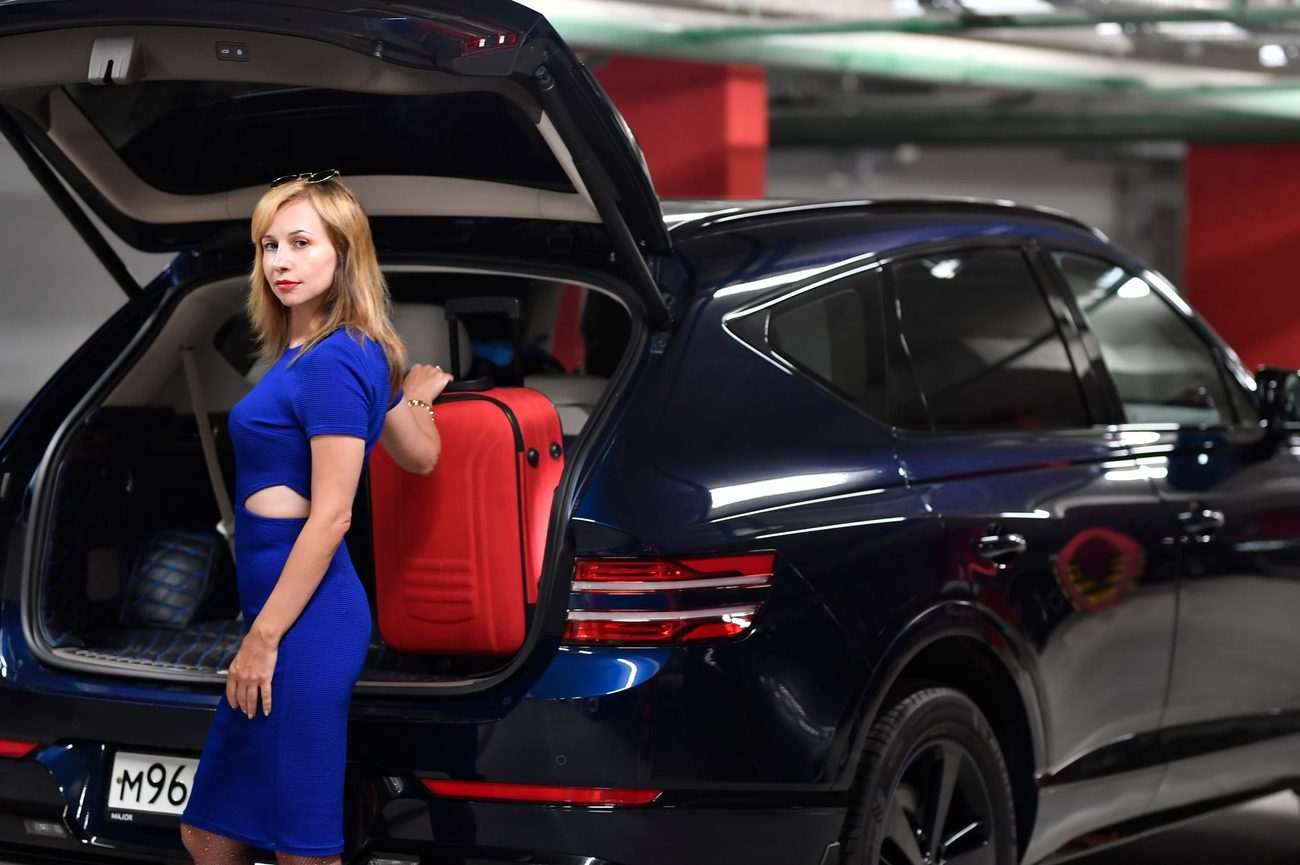
The CR-V's cargo area has a two-level floor. We keep the jack, the spare and the tools under it, where Honda put them. On top, here's the order:
- Heavy and flat goes first, against the back of the rear seats. Our two duffel bags, then shoes in a bag. Heavy things low and forward is how Wes loads a truck too, he says.
- Two lidded plastic bins, side by side. One for food that doesn't need cold (peanut butter, crackers, coffee, a knife, paper plates), one for everything else (towels, a beach blanket, a rain jacket, the first-aid kit). They stack, they don't tip, and nothing inside can roll.
- The cargo net over the top. We bought a stretchy one for about $15 that hooks to the four tie-down loops in the corners. It holds the bins and bags down and keeps everything from shifting forward.
- Soft things in the gaps. A pillow, a fleece, a grocery bag of paper towels. If something can slide, a towel goes beside it.
Metal mugs, flashlights and the umbrella now ride wrapped or wedged. The travel mug lives in a cup holder or in a sock. I'm not proud of the sock. It works.
The emergency kit stays reachable
This was the part we had wrong. Our kit (jumper cables, a flashlight, a basic first-aid kit, a tire gauge, a few bottles of water, a reflective triangle and a poncho) used to go in the cargo area first, then get buried under everything else. If you get a flat on the shoulder of the interstate, the last thing you want to do is unload two duffels and a cooler onto the grass in the dark to reach the cables.
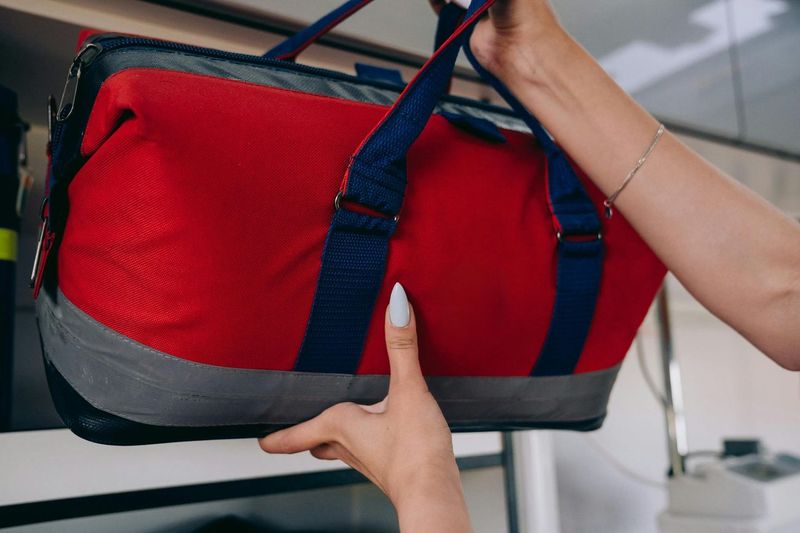
Now the kit lives in a canvas bag that goes in last, right at the tailgate, on top of the net. The flashlight and gauge moved up front into the driver's door pocket. Wes was fine with this change, which for him is enthusiastic support.
A few small things that help
We don't pack the roof. The CR-V has rails, and people put carriers up there, but anything on the roof costs gas through wind drag. At about 31 mpg on the highway, our Smokies drive is roughly 650 miles round trip, so 21 gallons or so. I'd rather keep it there.
We keep the load light enough that Wes doesn't have to bump the tire pressure. The sticker in the door jamb gives one number for normal loads, and we're never close to the car's limit with two people, two duffels and a dog.
And I load the car the night before, in the carport, then drive it to the end of our road and back with the radio off. If anything rattles in the first half-mile on our two-lane, it gets fixed before 5:40 the next morning, not at mile 40 with me climbing over the console.
Cost of all this, if you're keeping track the way I do: $15 for the cargo net and about $20 for the two bins. The bins came out of the trip account in October. Everything else we already had in the closet.